
The petrochemical industry operates at a scale where even the smallest technical error can result in major downtime, safety risks, or multimillion-dollar losses. This is why the commissioning phase remains one of the most complex and high-stakes stages of any facility’s lifecycle. To ensure smooth execution, engineers, EPC teams, and plant owners must understand the deeper challenges that arise during Petrochemicals Erection commissioning, a process that blends mechanical execution, system integration, and operational validation.
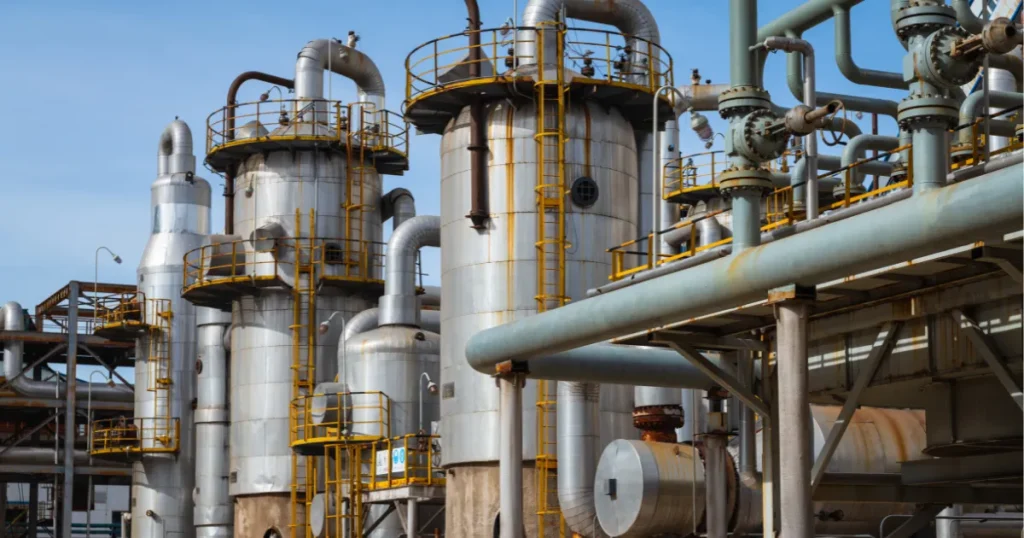
This blog explores the top seven challenges faced during commissioning and practical industry-proven strategies to overcome them. It has been written to help EPC firms, project managers, maintenance teams, and operational leaders conduct safer, faster, and more reliable commissioning activities.
1. Incomplete Documentation and Engineering Gaps
One of the most common problems that delays commissioning is missing, outdated, or inconsistent documentation. Drawings, datasheets, loop diagrams, and operation manuals often undergo revisions during the construction phase-but not all revisions reach the commissioning teams in time.
Why this becomes a challenge:
Without synchronized documentation, technicians face uncertainty during instrument calibration, process logic verification, or system testing. This increases the risk of errors and leads to unnecessary rework.
How to overcome it:
Successful projects usually employ a centralized document control system that tracks revisions and prevents outdated files from reaching frontline teams. Daily coordination between design engineers, construction supervisors, and commissioning staff ensures real-time updates and minimizes discrepancies.
2. Improper Inspection of Static and Critical Equipment
Many commissioning failures stem from equipment not meeting the required mechanical integrity before energizing the system. This becomes even more crucial for Petrochemicals Static equipment, which includes vessels, heat exchangers, columns, and reactors.
Why this becomes a challenge:
Static systems often undergo hidden stress during fabrication and installation-misalignment, improper torqueing, or welding imperfections may go unnoticed. If left unchecked, they can lead to leaks, overheating, vibration issues, or reduced operational efficiency.
How to overcome it:
Teams must conduct hydrotesting, NDT inspections, and alignment checks before moving to live testing. Cross-functional quality audits involving fabrication, construction, and QA/QC teams ensure equipment meets OEM and project standards.
3. Late Integration Between Mechanical, Electrical, and Control Systems
Mechanical completion and electrical/instrumentation readiness don’t always progress at the same pace. This lack of integration becomes a significant bottleneck during Petrochemicals Erection commissioning, especially when control loops depend on multiple subsystems.
Why this becomes a challenge:
If mechanical teams complete equipment setup but control systems lag behind, commissioning cannot proceed. This misalignment often pushes project deadlines, increases manpower requirements, and complicates test sequencing.
How to overcome it:
Integrated commissioning schedules, supported by system-wise progress tracking dashboards, allow managers to visualize dependencies. Early FAT/SAT testing, I/O verification, and pre-startup safety reviews ensure smoother synchronization.
4. Delays in Shutdowns and Turnarounds
Petrochemical facilities often connect newly erected units with existing systems, which require planned shutdowns. Coordination of these outages is complex and susceptible to delays. Adding to that, external factors such as supply chain issues or manpower shortages may impact Petrochemical shutdowns.
Why this becomes a challenge:
Any delay in shutdown windows disrupts the commissioning sequence. Since shutdown activities influence the entire plant, mismanagement can cause operational downtime or safety risks.
How to overcome it:
Successful shutdown planning begins months in advance with clear scope definition, material staging, and workforce allocation. Digital shutdown management tools also help track progress and prevent overruns.
5. Skilled Workforce Shortage and Operator Unfamiliarity
Petrochemical commissioning demands highly specialized skills-rotating machinery experts, instrument technicians, process engineers, safety specialists, and control system experts. However, many regions experience a shortage of trained commissioning professionals.
Why this becomes a challenge:
Untrained personnel may misconfigure equipment, misinterpret test results, or skip critical safety steps. This increases the likelihood of accidents and plant instability during first operations.
How to overcome it:
Leading companies invest in structured training programs, OEM-led workshops, system walkthroughs, and simulation-based learning before commissioning begins. Bringing in expert contractors ensures the facility receives accurate and safe commissioning support.
6. Lack of Long-Term Maintenance Planning
A plant cannot operate optimally after commissioning unless long-term maintenance strategies are established. However, maintenance planning often begins too late-causing gaps in reliability, spare parts availability, and operational readiness. Tools like Petrochemical annual maintenance contract agreements ensure that the plant receives consistent care.
Why this becomes a challenge:
Improper maintenance planning leads to premature failures, unscheduled shutdowns, and costly operational interruptions.
How to overcome it:
The best practice is to define a reliability-centered maintenance strategy during the commissioning phase. This includes asset criticality assessment, predictive maintenance setup, lubrication schedules, spare parts planning, and risk-based inspection programs.
7. Poor Communication and Coordination Between Teams
Commissioning involves hundreds of activities performed simultaneously by multiple teams-mechanical, electrical, instrumentation, process operations, OEM specialists, and third-party inspectors. Without tight coordination, tasks get duplicated, missed, or performed out of sequence.
Why this becomes a challenge:
Communication gaps lead to incomplete checklists, inconsistent test results, and unsafe system activation.
How to overcome it:
Daily toolbox talk meetings, digital communication channels, shared test sheets, and clear escalation procedures are essential. Assigning dedicated commissioning leads for each discipline helps maintain clarity and accountability.
How Petrochemicals Erection Commissioning Can Be Streamlined
Delivering successful commissioning requires structured workflows, transparent reporting, and precise process validation. Here’s how companies can improve outcomes:
✔ Start with mechanical integrity and safety reviews
These checks ensure that all equipment is ready for energization and process testing.
✔ Run subsystem-level testing before full integration
This prevents system overload and helps detect hidden faults earlier.
✔ Engage OEMs and commissioning specialists
Their expertise reduces the risk of operational failure and accelerates acceptance testing.
✔ Maintain continuous communication across teams
Real-time collaboration avoids rework, duplication, and delays.
✔ Document every step to ensure traceability
Structured reports help during audits and support long-term plant optimization.
FAQs: About Petrochemical Commissioning
1. What is erection and commissioning in petrochemical projects?
Erection refers to installing equipment, structures, and systems according to engineering designs, while commissioning involves testing, verifying, and preparing all systems for safe and stable operation.
2. What is the difference between commissioning and pre-commissioning?
Pre-commissioning includes cleaning, flushing, drying, and mechanical checks to prepare equipment, whereas commissioning involves actual testing, calibration, loop checks, and operational verification.
3. What are the three types of commissioning?
The three common types are initial commissioning, re-commissioning, and continuous commissioning. These ensure equipment efficiency at various stages of the plant lifecycle.
4. What is the main purpose of commissioning in petrochemical plants?
The purpose is to ensure all equipment and systems operate safely, efficiently, and according to design parameters before commercial operations begin.
Building Reliable Petrochemical Facilities for the Future
Delivering flawless Petrochemicals Erection commissioning requires careful planning, skillful execution, and cross-functional coordination. By understanding the seven major challenges-documentation gaps, poor equipment checks, shutdown delays, skill shortages, weak communication, and maintenance oversights-companies can build more reliable and efficient petrochemical facilities.
When executed correctly, commissioning ensures safer operations, consistent production, and long-term asset performance-creating a foundation for sustainable industrial growth.